
Don't scrape first
The instinct when candle wax hits a hardwood floor is to grab a knife and start scraping. This is how scratches happen. Wax that has pooled and hardened on a finished surface can usually be removed cleanly, but the method matters more than the speed.
The ice method (safest)
Place a plastic bag filled with ice cubes directly on the wax. Let it sit for five to ten minutes until the wax becomes brittle. Once hardened, the wax should crack and lift off the surface with gentle pressure from a plastic scraper or the edge of a credit card. Work slowly. The goal is to pop the wax off the finish rather than dragging it across the surface.
This method works well for small spills on sealed hardwood. The cold contracts the wax without affecting the floor's finish, and the plastic scraper avoids scratching.
Pro Tip
Use a plastic scraper or credit card edge — never a metal knife or blade. The goal is to pop the wax off the finish, not drag it across the surface.
The iron method (for larger spills)
Place a clean cloth or a few layers of paper towel over the wax. Set an iron to the lowest heat setting with no steam. Press the iron gently onto the cloth for five to ten seconds. The heat softens the wax, which is absorbed into the cloth. Lift and check progress, then repeat with a clean section of cloth until the wax is gone.
Important
Keep the iron moving and use the lowest effective temperature. Excessive heat can damage polyurethane finishes and leave a permanent cloudy mark. Always keep the cloth between the iron and the floor.
Cleaning the residue
After removing the bulk of the wax with either method, a thin residue usually remains. Dampen a cloth with a small amount of mineral spirits and wipe gently. Mineral spirits dissolve wax residue without damaging most hardwood finishes. Test an inconspicuous area first if you are unsure about your floor's finish.
Once the residue is gone, wipe the area with a cloth dampened with plain water, then dry immediately. Standing moisture on hardwood is never a good idea, even in small amounts.
What not to use
- Metal scrapers or knives. Too easy to gouge or scratch the finish.
- Vinegar. Acidic solutions can dull polyurethane finishes over time.
- Excessive water. Water seeps into seams between boards and causes swelling.
- Wax-based floor cleaners. Adding more wax on top of the problem creates buildup.
Colored candle wax
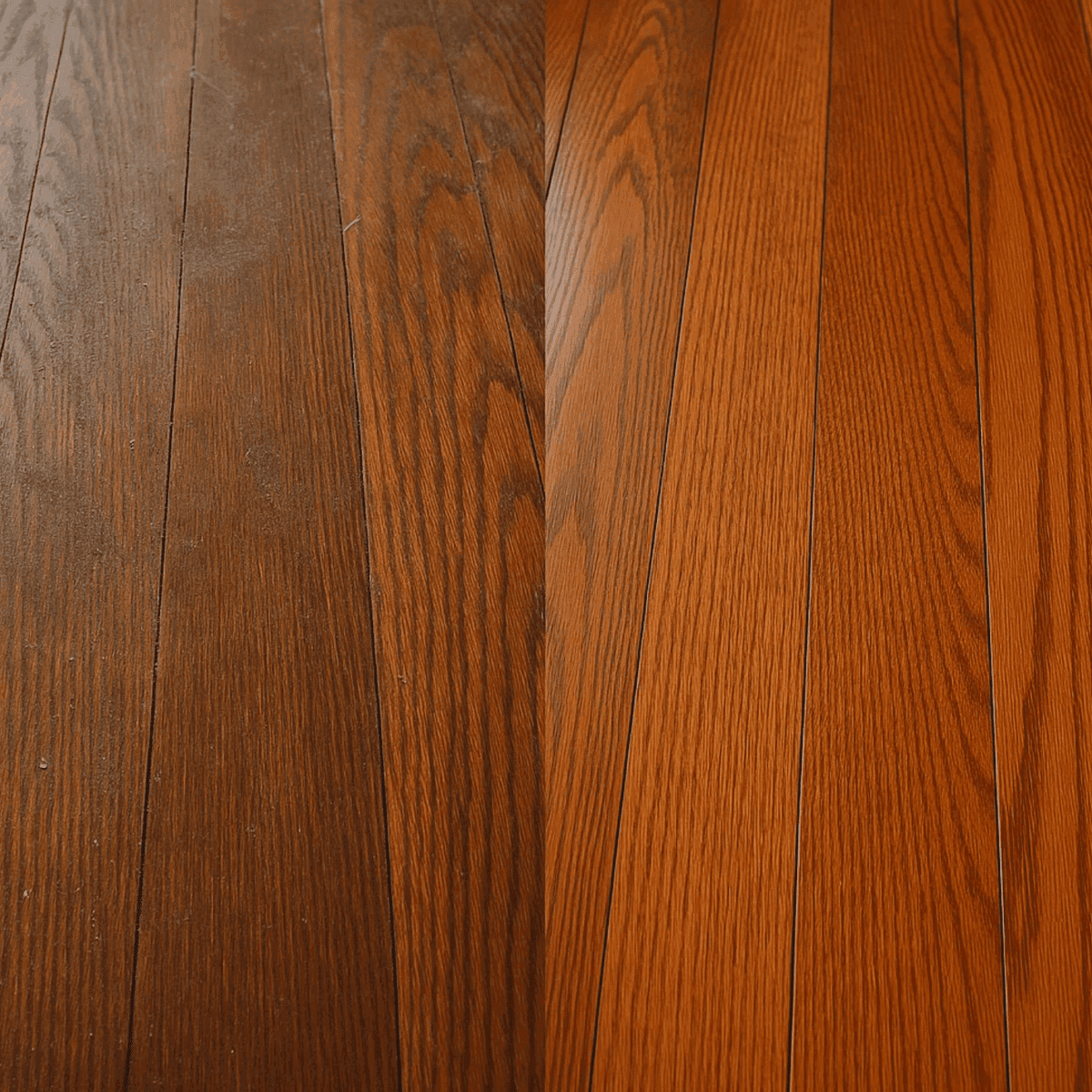
Colored candles add dye to the equation. The wax removal process is the same, but the dye may leave a faint discoloration on lighter wood finishes after the wax itself is gone. Mineral spirits usually handles this. If a tint remains, a professional hardwood floor cleaning can strip the discoloration without damaging the finish.
When to call a professional
Large wax spills that have spread across multiple boards, wax that has seeped into gaps between planks, or wax on unfinished or oil-finished hardwood are all situations where professional treatment is the safer route. The risk of scratch damage or finish discoloration increases with the size and complexity of the spill.
A professional hardwood floor cleaning also addresses the accumulated film from candle smoke, furniture polish, and daily use that builds up over time. If you are dealing with a wax incident, it may be worth combining the spot treatment with a full floor cleaning.