
Vacuuming your rug correctly
Vacuum area rugs at least once per week. High-traffic rugs benefit from twice per week. Use the suction-only setting — turn off the beater bar or brush roll, which can pull fibers, damage fringe, and accelerate wear on delicate weaves.
Vacuum in the direction of the pile, not against it. For hand-knotted rugs, vacuuming against the pile can loosen knots over time. If you're unsure which direction the pile runs, run your hand across the rug. The smooth direction is with the pile.
Flip the rug and vacuum the back periodically. Grit works through the pile from the top and settles against the backing. Vacuuming the reverse side dislodges particles that front-side vacuuming can't reach.
Pro Tip
Turn off the beater bar or brush roll when vacuuming area rugs. The spinning brush can pull fibers, damage fringe, and accelerate wear on delicate weaves. Suction-only is the safe setting.
Spot cleaning spills
Speed is everything. Blot the spill immediately with a clean white cloth. Press firmly to absorb liquid — don't rub, which spreads the stain and can damage fibers.
For most spills, cold water is the safest first treatment. Dampen a cloth with cold water and blot the area. For tougher stains, mix a small amount of mild dish soap (a drop or two) in cold water, apply with a cloth, blot, and then rinse by blotting with a water-dampened cloth. Remove soap thoroughly — residue left in the rug attracts dirt.
Test any cleaning solution on a hidden area of the rug first, especially on silk, antique, or naturally dyed pieces. Some dyes will bleed with moisture or pH changes that seem harmless.
Important
Always test cleaning solutions on a hidden area of the rug first. Some natural and reactive dyes will bleed with moisture or pH changes that seem harmless on other fabrics.
Dealing with odors
Baking soda is effective for general rug odor. Sprinkle a thin layer across the rug, let it sit for 15 to 30 minutes, then vacuum it up thoroughly. Baking soda absorbs odor compounds without introducing chemicals or moisture.
For pet odor, baking soda provides temporary relief but won't eliminate urine that has soaked through to the rug's backing. Pet urine odor requires enzyme-based treatment that reaches the source — this is a professional job.
Rotating your rug
Rotate area rugs 180 degrees every six months. This distributes foot traffic and sun exposure evenly, preventing one-sided wear patterns and uneven fading. Rugs in direct sunlight should be rotated more frequently or protected with UV-filtering window treatments.
Deep cleaning at home
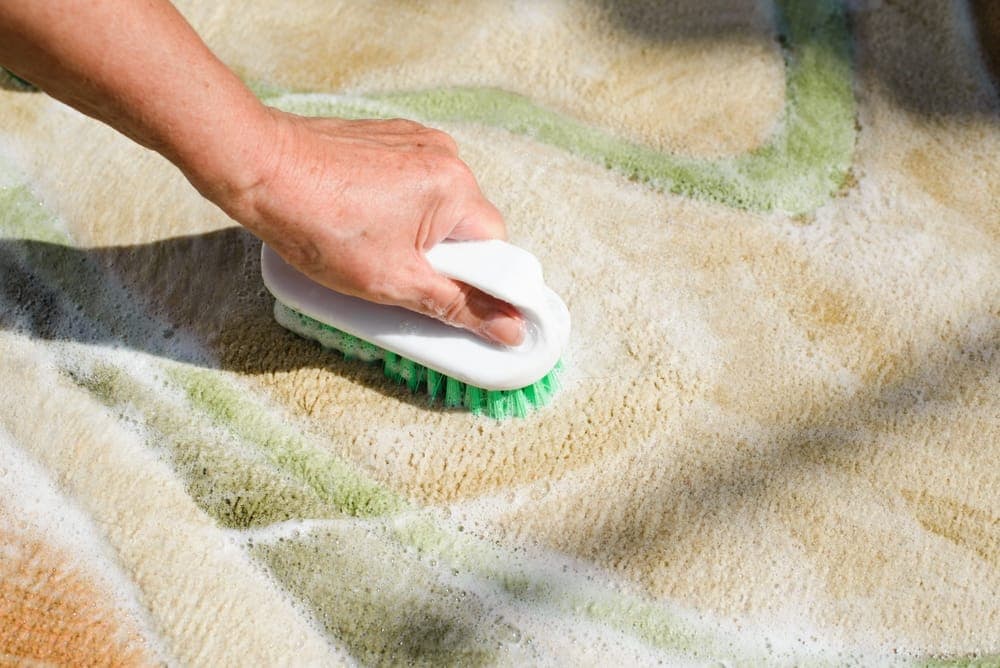
For small, washable rugs (cotton, machine-made synthetics), some can go in the washing machine on a gentle cycle with cold water. Check the label first. Air dry flat — never put a rug in the dryer, which can cause shrinkage and damage.
For larger rugs that can't go in a machine, take them outside on a dry day and beat them with a broom handle or rug beater to dislodge embedded dirt. This old-fashioned method is surprisingly effective for removing grit that vacuuming misses.
Avoid hosing down rugs outdoors unless they are fully synthetic and can dry quickly. Wool, silk, cotton, and jute rugs that stay wet for extended periods risk mold, mildew, shrinkage, and dye bleeding.
When to call a professional
- Pet urine contamination. Surface cleaning won't reach urine in the backing and padding. Enzyme treatment requires professional application.
- Set-in or large stains. Anything that home treatment hasn't resolved after two attempts is better left to a professional to avoid making it worse.
- Valuable or antique rugs. The stakes are too high for trial and error. Professional fiber identification and tested cleaning methods protect your investment.
- Silk or delicate fibers. Silk requires controlled, minimal-moisture techniques that consumer products and methods can't replicate safely.
- Annual deep cleaning. Even with good daily care, rugs accumulate embedded grit and allergens that need professional extraction once a year.
Regular home maintenance extends the time between professional cleanings and keeps your rug looking good day to day. But there's a depth limit to what home methods can achieve, and crossing that line with the wrong approach can do more harm than good.