

It's probably not the tile
Ceramic and porcelain tile are engineered to resist staining. The glazed surface on most tile floors is dense, non-porous, and holds up for decades with minimal maintenance. If your tile floor looks dingy, the tile itself is almost certainly fine. The grout between the tiles is a different story.
Grout is porous. It absorbs liquids, oils, dirt, and cleaning product residue over time. As the grout lines darken, the contrast against the tile changes the appearance of the entire floor. A room with white tile and dirty grout looks grimy even when the tile surface is spotless.
How grout gets dirty
Every time you mop, some of the dirty water settles into the grout lines instead of being picked up. Over months, this deposits a layer of soil in the porous material. Kitchen grout absorbs grease splatter and food residue. Bathroom grout collects soap scum and moisture that promotes mildew. Entryway grout takes the worst of the tracked-in dirt.
Cleaning products contribute to the problem when used improperly. Many tile floor cleaners leave a thin film on the surface. This film is invisible on the tile but accumulates in the grout, adding another layer of residue on top of the embedded dirt.
The result is grout that gradually shifts from its original color to a shade of gray or brown. The change happens slowly enough that most people don't notice until they see a section that was covered by furniture — the contrast makes the discoloration obvious.
Good to Know
Move a piece of furniture that has been in place for a year or more and compare the grout underneath to the exposed grout nearby. The color difference reveals how much discoloration has accumulated.
Why mopping doesn't fix it
A mop glides across the tile surface. The grout lines sit below the tile plane, and the mop head bridges over them without ever making firm contact with the grout. Whatever contact does occur tends to push dirty water down into the grout and leave what's already there in place.
Even dedicated grout brushes have limits. Scrubbing with a brush and household cleaner can improve the top layer of grout, but the embedded grime that has been accumulating for months or years is too deep for surface scrubbing to reach. The brush cleans the top of the grout, not the interior.
What actually restores it
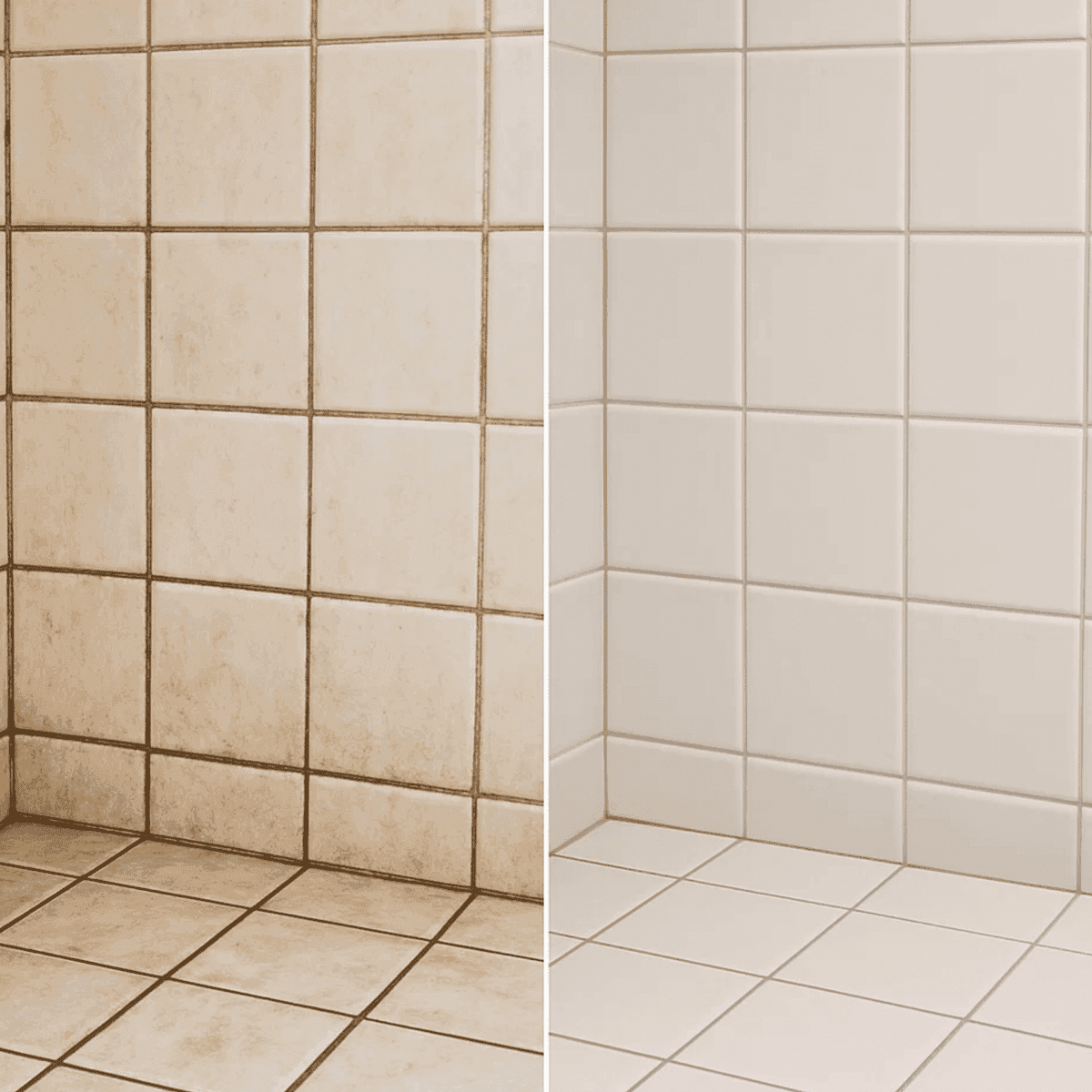
Professional tile and grout cleaning works because of mechanical scrubbing. A cleaning solution matched to the tile goes down first, and a rotary floor buffer scrubs it into the tile and grout together. The buffer's brush reaches down into the recessed grout lines a mop bridges over, loosening the embedded dirt below the surface. The floor then gets rinsed and mopped up, and the original color contrast comes back.
The change is usually visible while the floor is still damp. Grout lines that had drifted toward gray step back to their original shade, and once that embedded layer is gone, routine mopping keeps the floor presentable far longer.
Pro Tip
After a professional deep clean, use fresh mop water every time you mop. Dirty mop water is the main thing that loads grout lines back up with soil, and clean water keeps the results going far longer.
Tile surface issues
In some cases, the tile surface itself contributes to the dull appearance. This happens with unglazed tile, natural stone tile (travertine, marble, slate), and textured tile that has micro-grooves where dirt accumulates. These surfaces require specific cleaning approaches:
- Natural stone needs pH-neutral cleaners. Acidic products (vinegar, citrus-based cleaners) can etch the surface and create permanent dullness.
- Textured tile traps dirt in its surface texture. A flat mop won't reach it, so a scrub brush or a professional floor buffer is needed.
- Unglazed tile is porous like grout and absorbs spills, so it benefits from the same deep scrubbing the grout gets.
Maintaining the results
- Sweep or dry mop before wet mopping. Loose debris becomes embedded grime when mixed with mop water.
- Use clean mop water. Change the bucket frequently. Dirty mop water deposits soil into grout lines with every pass.
- Wipe up spills promptly. The less time a liquid sits on grout, the less it absorbs.
- Avoid oil-based or wax-based cleaners. These leave residue that attracts dirt and can yellow over time.
- Schedule a periodic deep clean. Even careful mopping lets some soil settle into the grout. A professional scrub every year or two resets the floor before the discoloration locks in.
Important
Avoid oil-based or wax-based tile cleaners. These leave residue that attracts dirt and can yellow over time, making the problem worse.
A tile floor that looks old and tired is usually a grout problem, not a tile problem. A professional deep clean typically costs far less than replacing the floor and delivers a dramatic visual improvement.