
Mold vs. mildew: what's the difference?
Both are fungi that thrive in moist environments, but they behave differently and present different levels of risk.
Mildew grows on surfaces. It appears as a flat, powdery or downy patch, usually white, gray, or yellowish. In carpet, it tends to show up on the surface fibers where moisture has been present. Mildew is relatively easy to clean and doesn't penetrate deeply into materials. It's a nuisance, not a structural threat.
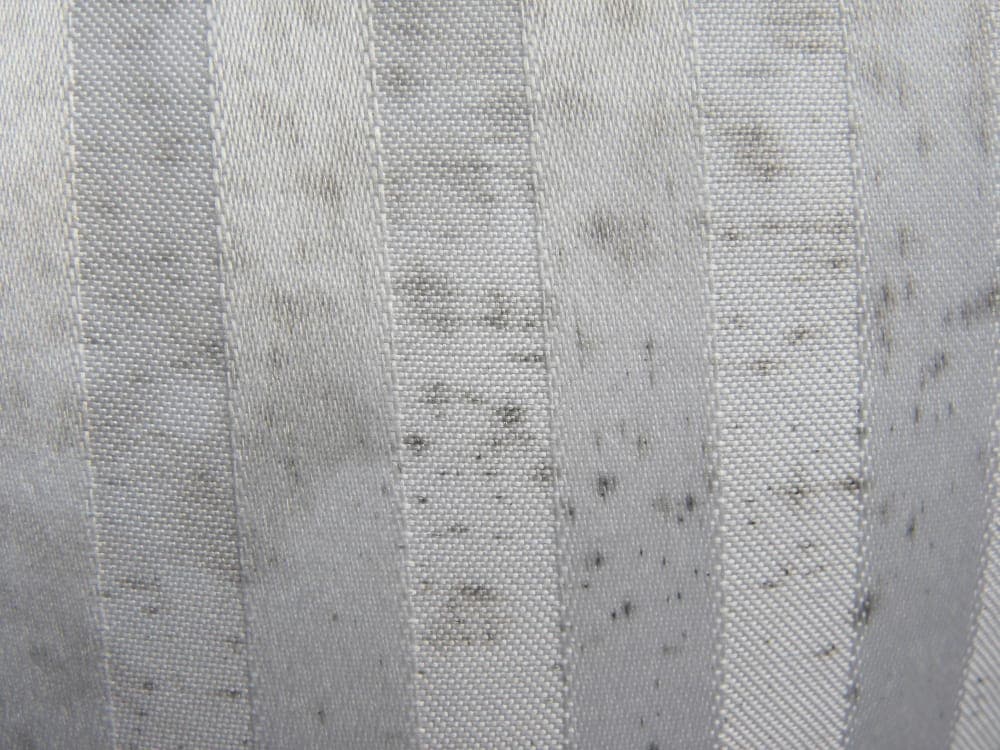
Mold penetrates into materials. It grows in three dimensions, sending root-like structures called hyphae deep into carpet fibers, backing, and padding. Mold appears as fuzzy, raised patches that can be black, green, brown, or white. It produces spores that become airborne and can cause health problems. Mold is harder to remove and, if left unchecked, can compromise the carpet structurally.
The practical distinction: mildew can usually be cleaned from the surface. Mold that has reached the padding or backing often requires professional treatment and may require replacement of the affected materials.
Good to Know
Mold can begin growing within 24 to 48 hours of moisture exposure. If carpet gets wet from any source, drying speed is the single most important factor in preventing mold colonization.
How to tell if you have a problem
Mold and mildew don't always announce themselves visually. The signs to watch for:
- Smell. A persistent musty or earthy odor that doesn't go away with airing out the room. This is the most common early indicator.
- Visible discoloration. Spots or patches on the carpet surface that are white, gray, green, or black. Check along baseboards, under furniture, and in corners where air circulation is limited.
- Texture changes. Carpet that feels damp, spongy, or stiff in certain areas when the rest of the floor is dry.
- Health symptoms. Unexplained congestion, sneezing, headaches, or respiratory irritation that improves when you leave the house and returns when you come back.
- History. Any past water damage, flooding, or prolonged moisture exposure (a slow leak, a spill left untreated, or carpet that was steam cleaned and didn't dry properly) creates conditions for mold growth.
What causes mold in carpet
Mold needs three things: moisture, organic material to feed on, and time. Carpet provides the organic material (fibers, backing adhesive, dust, skin cells). All that's needed is moisture and a few days.
The most common moisture sources:
- Flooding or water damage. Carpet that wasn't dried within 24-48 hours of getting wet is likely to develop mold.
- Slow leaks. A dripping pipe, window condensation, or foundation seepage that keeps the carpet or padding perpetually damp.
- High humidity. Indoor humidity above 60% sustained over weeks creates conditions where mold can develop even without a direct water source.
- Improper carpet cleaning. Steam cleaning that leaves excessive moisture in the carpet and padding, especially if ventilation is poor and drying takes more than 24 hours.
- Spills left untreated. A drink or pet accident that soaks into the padding and isn't dried properly can create a localized mold colony.
What actually kills mold in carpet
Effective mold remediation requires addressing both the moisture source and the mold itself.
Step 1: Eliminate the moisture. Mold cannot survive without moisture. Fix leaks, reduce humidity with a dehumidifier, improve ventilation, and ensure the area is completely dry before treatment.
Step 2: Physical removal. Mold needs to be physically extracted from the carpet, not just chemically treated on the surface. Vacuuming with a HEPA-filter vacuum removes surface spores. Professional extraction reaches mold in the base of the pile and backing.
Step 3: Antimicrobial treatment. After extraction, an antimicrobial agent kills remaining mold at the cellular level and inhibits regrowth. This is distinct from masking the problem with fragrance or bleach.
What doesn't work
- Bleach. Bleach kills mold on non-porous surfaces (tile, countertops) but is ineffective on porous materials like carpet. It cannot penetrate the fibers deeply enough, and the water in bleach actually adds moisture that benefits mold growth.
- Vinegar and baking soda. May address minor surface mildew but cannot reach mold that has penetrated into the padding or backing.
- Painting or covering over it. Mold continues growing underneath coverings. Out of sight is not out of mind with active mold.
Important
Never scrub visible mold without a HEPA-filter vacuum or proper containment. Aggressive scrubbing sends spores airborne throughout the room, potentially spreading contamination to unaffected areas.
When to DIY vs. when to call a professional
DIY is reasonable when:
- The affected area is small (under 10 square feet).
- The mold is limited to the carpet surface (mildew).
- The moisture source has been identified and fixed.
- No one in the household has respiratory conditions.
Call a professional when:
- The affected area is larger than 10 square feet.
- Mold is in the padding or backing (musty smell persists after surface cleaning).
- The mold returned after previous treatment.
- Anyone in the household has allergies, asthma, or immune system concerns.
- There is visible structural mold (on baseboards, subfloor, or walls near the carpet).
The first 24 hours after discovering mold
- Stop the moisture. Fix the leak, turn on the dehumidifier, or address whatever is keeping the area wet.
- Ventilate the area. Open windows and run fans to begin drying.
- Don't disturb the mold unnecessarily. Aggressive scrubbing or vacuuming without a HEPA filter sends spores airborne throughout the room.
- Isolate if possible. Close doors to the affected room to prevent spores from spreading to other areas of the house.
- Assess the scope. Check under the carpet edge if possible. If the padding is wet or discolored, the problem goes deeper than the surface.
- Call for professional assessment if the scope is unclear. A trained technician can evaluate the extent of contamination and recommend the appropriate response.
Preventing mold in carpet
- Keep indoor humidity below 50%. Use a dehumidifier in humid climates and during summer months.
- Fix leaks immediately. Even small, slow leaks create conditions for mold within days.
- Dry spills and accidents within 24 hours. Any moisture that reaches the padding needs to be extracted, not just blotted from the surface.
- Use a low-moisture cleaning method. Cleaning methods that leave carpet wet for 6-8 hours create a window for mold growth. Low-moisture processes like Safe-Dry's carbonated method dry in about an hour, eliminating that risk.
- Ensure good air circulation. Move furniture periodically to allow airflow behind and under heavy pieces. Keep closet doors open in humid rooms.
- Vacuum regularly with a HEPA filter. Removing dust and organic debris reduces the food source mold needs to grow.
Pro Tip
Safe-Dry's low-moisture carbonated process uses about 10% of the water that steam cleaning requires and dries in roughly one hour — making it the safest professional cleaning choice for mold-prone environments.
Mold in carpet is a solvable problem when caught early and addressed properly. The key is controlling moisture, treating the source rather than the surface, and preventing the conditions that allowed growth in the first place.